2025 – present
VynixAI · Senior Solutions Architect, AI & Cloud Infrastructure
Building AI-driven, cloud-native platforms for real-time retail and enterprise workloads: RAG pipelines, scalable inference, and agent automation.
Open to consulting, collaboration, and roles
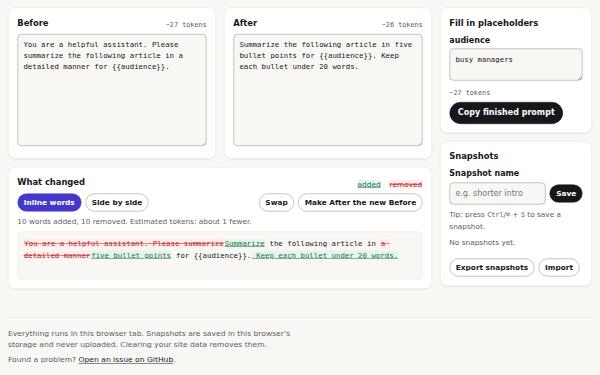
This headline started as a wordy prompt. Cutting the filler took it from about 23 tokens to 12.
I’m Iggy Mwangi, an AI systems architect in Dallas–Fort Worth. Here you’ll find free tools that run in your browser, short essays on keeping AI systems working in production, and my open-source projects. You don’t need an account for any of it.
Now VynixAI · Nubla AI Earlier Apple · Contran · AT&T · Sam’s Club
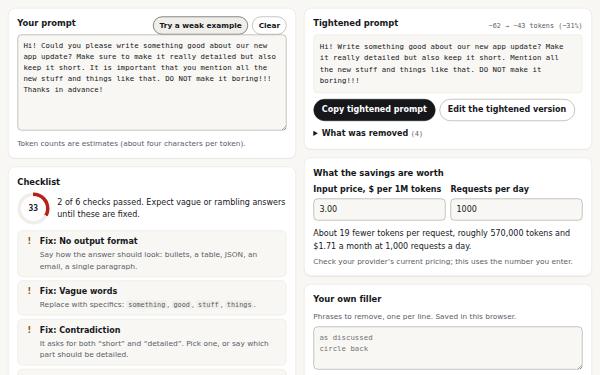
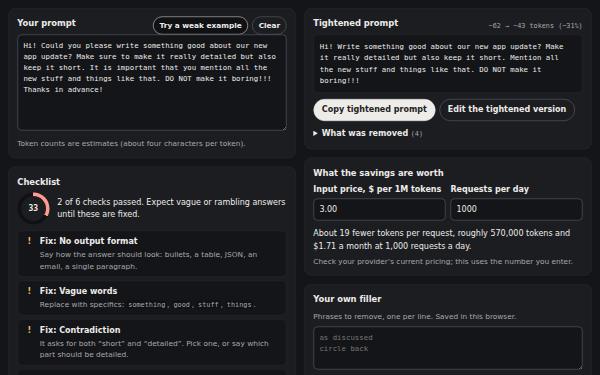
Paste a prompt, or pick an example. You’ll get a score, a list of what’s missing, a version with the filler words removed, and a rewrite with clear sections. It’s a small version of Prompt Matrix Evaluator, and everything happens in your browser.
Tightened
Each tool is a single page you can use right away. Every card says where your text goes, so you can choose the ones that fit your privacy needs.
Checks a prompt for a clear task, output format, length limit, audience, vague words, and contradictions, then cuts the filler and shows what that saves per month at your volume. A good first tool to try.
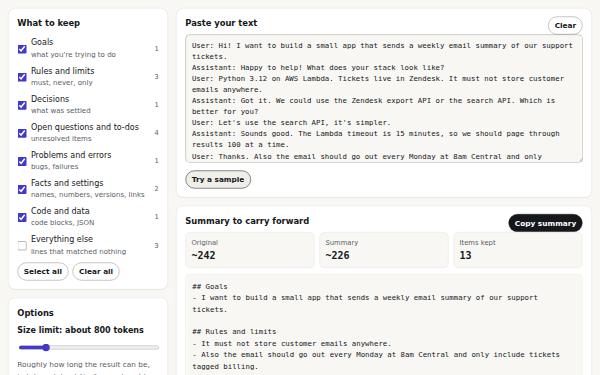
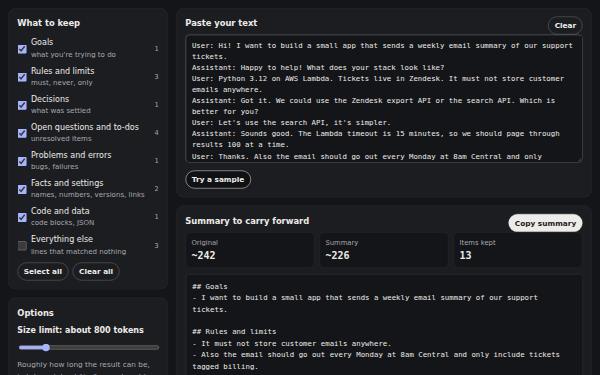
Paste a long chat or notes and get the goals, rules, decisions, open questions, and key facts. Untick or re-sort any item, then copy a ready-made handoff prompt for a fresh chat.
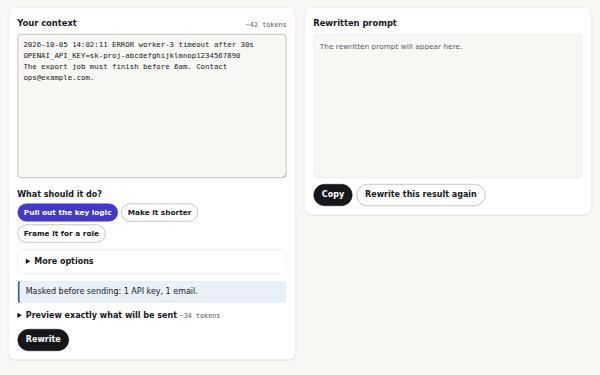
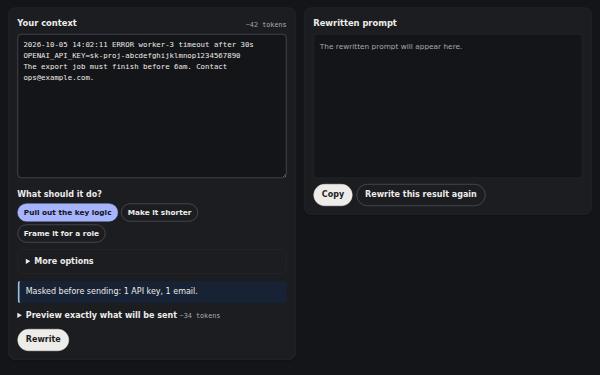
Rewrites messy logs, code, or notes into a tighter prompt using a hosted model. Secrets, emails, and phone numbers are masked before anything is sent, and you can preview exactly what goes out.
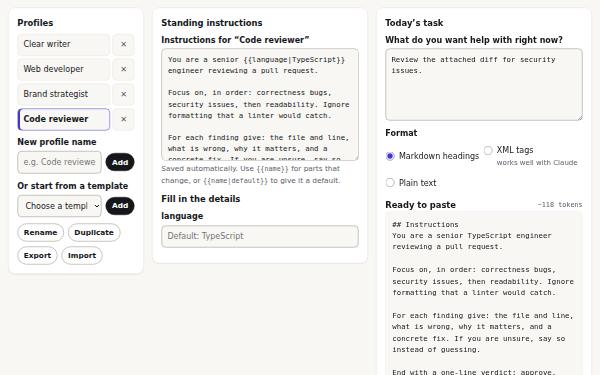
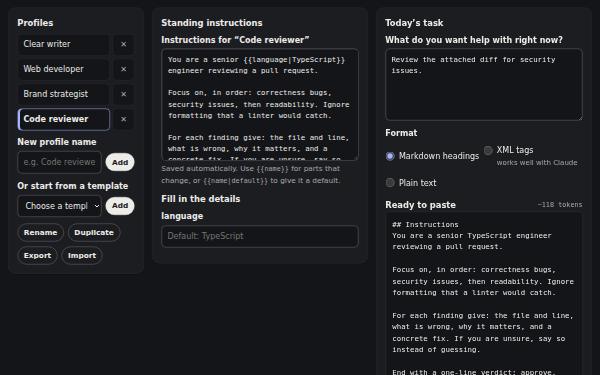
Reusable instruction profiles with fill-in variables and defaults, six starter templates, and Markdown, XML, or plain-text output for any AI chat or system prompt.
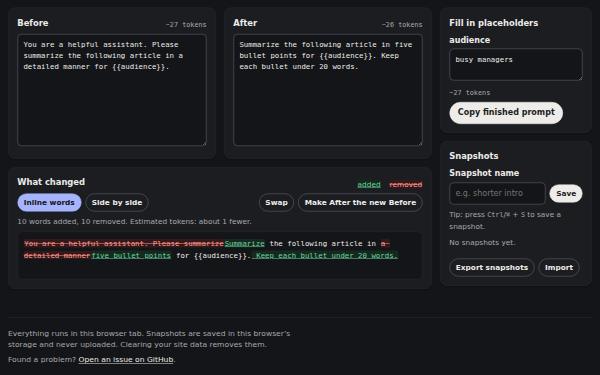
Compare two prompt versions inline or side by side, fill in placeholders, and keep snapshots you can export, import, and roll back to.
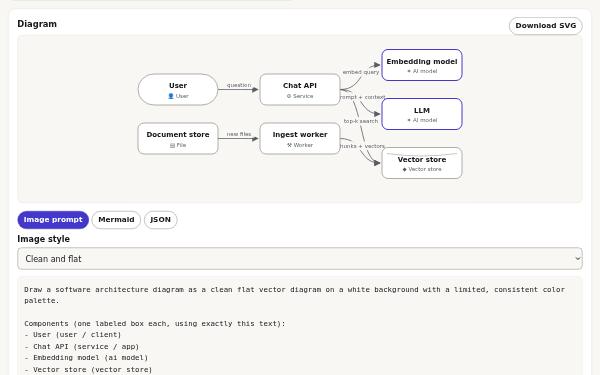
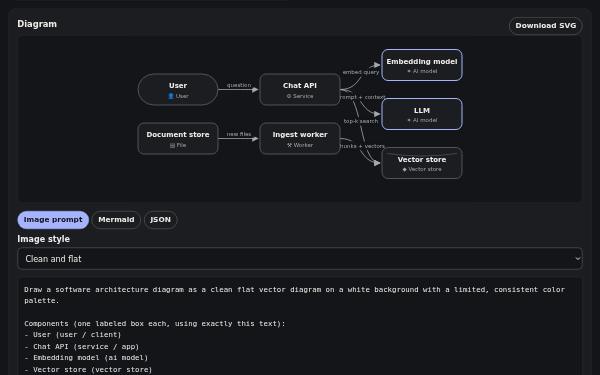
Describe components and connections to get a live architecture diagram. Download it as SVG, paste Mermaid into your docs, or copy a prompt for an image model.
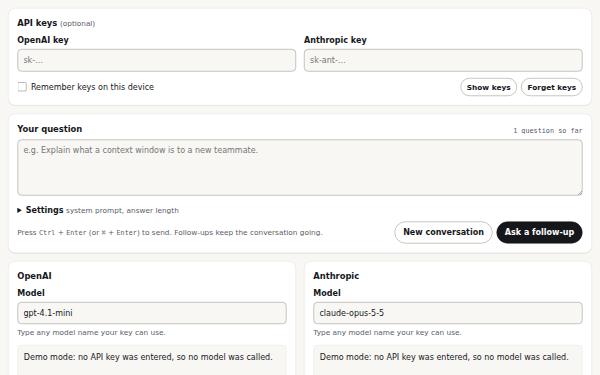
Ask OpenAI and Anthropic models the same question side by side, with follow-ups, a shared system prompt, response times, token counts, and a Markdown export.
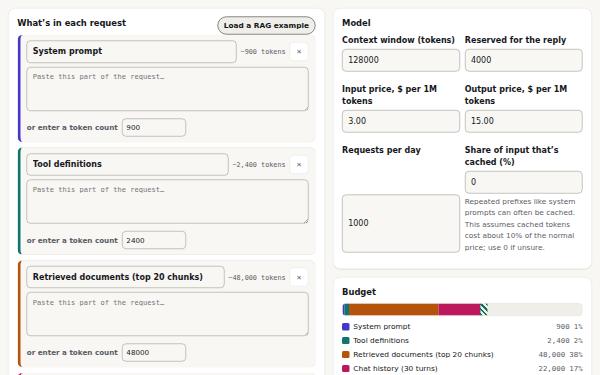
Plan how much text fits in one request. Budget each part of the prompt, check there’s room for the reply, see the monthly cost, and find what to cut first.
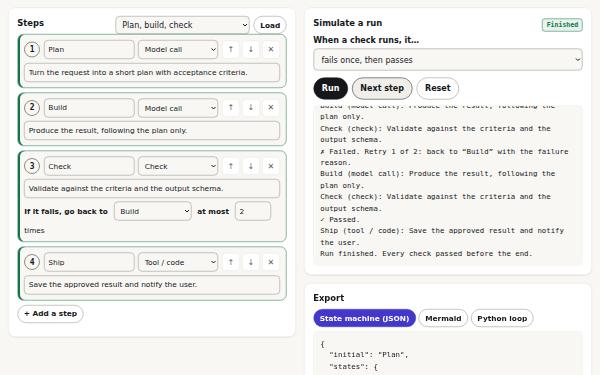
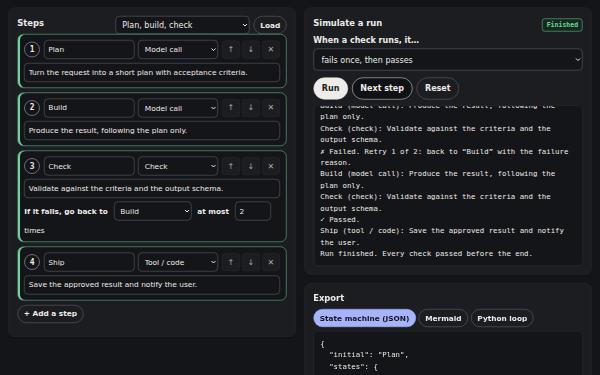
Sketch an AI agent as a fixed list of steps, each with a check and a limit on retries. Simulate failures, then export a spec, a diagram, or starter Python code.
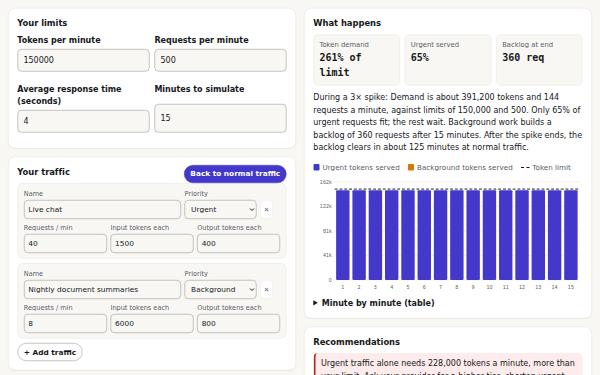
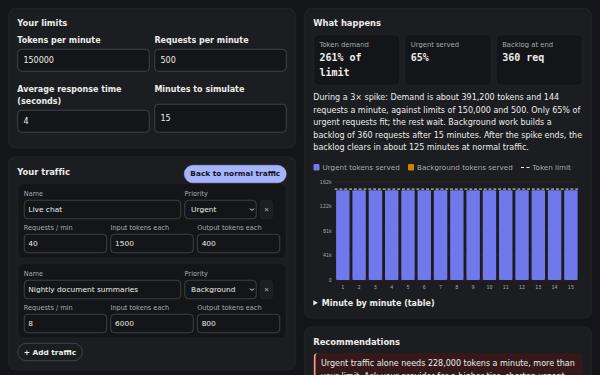
Enter your API rate limits and traffic to see whether you’ll hit them. Also see how urgent requests stay fast when things are busy, and how long a backlog takes to clear.
Two essays on this site, plus longer guides kept on GitHub.
Open-source code on GitHub. Free to read, use, and adapt under each repo’s license.
Pattern libraries, an incident runbook, field notes, a weekly briefing, a bench of small tools, and a few essays about maps, minds, and reading.
 Flagship · synthesis
Applied AI Engineering
The hub. Start here for the big picture: it connects the ideas from the other sites into one argument about where AI systems are heading.
Flagship · synthesis
Applied AI Engineering
The hub. Start here for the big picture: it connects the ideas from the other sites into one argument about where AI systems are heading.
 Reference · pattern language
Production AI Patterns
Reference · pattern language
Production AI Patterns
 Reference · incident procedures
The AI Runbook
Reference · incident procedures
The AI Runbook
 Guide · agent systems
Agentic Engineering
Guide · agent systems
Agentic Engineering
 Workbench · 24 tools
Systems Bench
Workbench · 24 tools
Systems Bench
Open to consulting, collaboration, and roles.
2025 – present
Building AI-driven, cloud-native platforms for real-time retail and enterprise workloads: RAG pipelines, scalable inference, and agent automation.
2024 – present
ML systems and cloud architectures across AWS, Azure, and GCP, focused on LLM integration, retrieval, and dependable ML pipelines.
Baselines and methods aren’t published here. The work falls under confidentiality agreements with my employers. I’m glad to discuss the details under NDA.
Software engineer who has worked up the stack from embedded firmware to mobile, cloud, machine learning, and now agent systems, at companies including Apple, Contran, AT&T, and Sam’s Club.